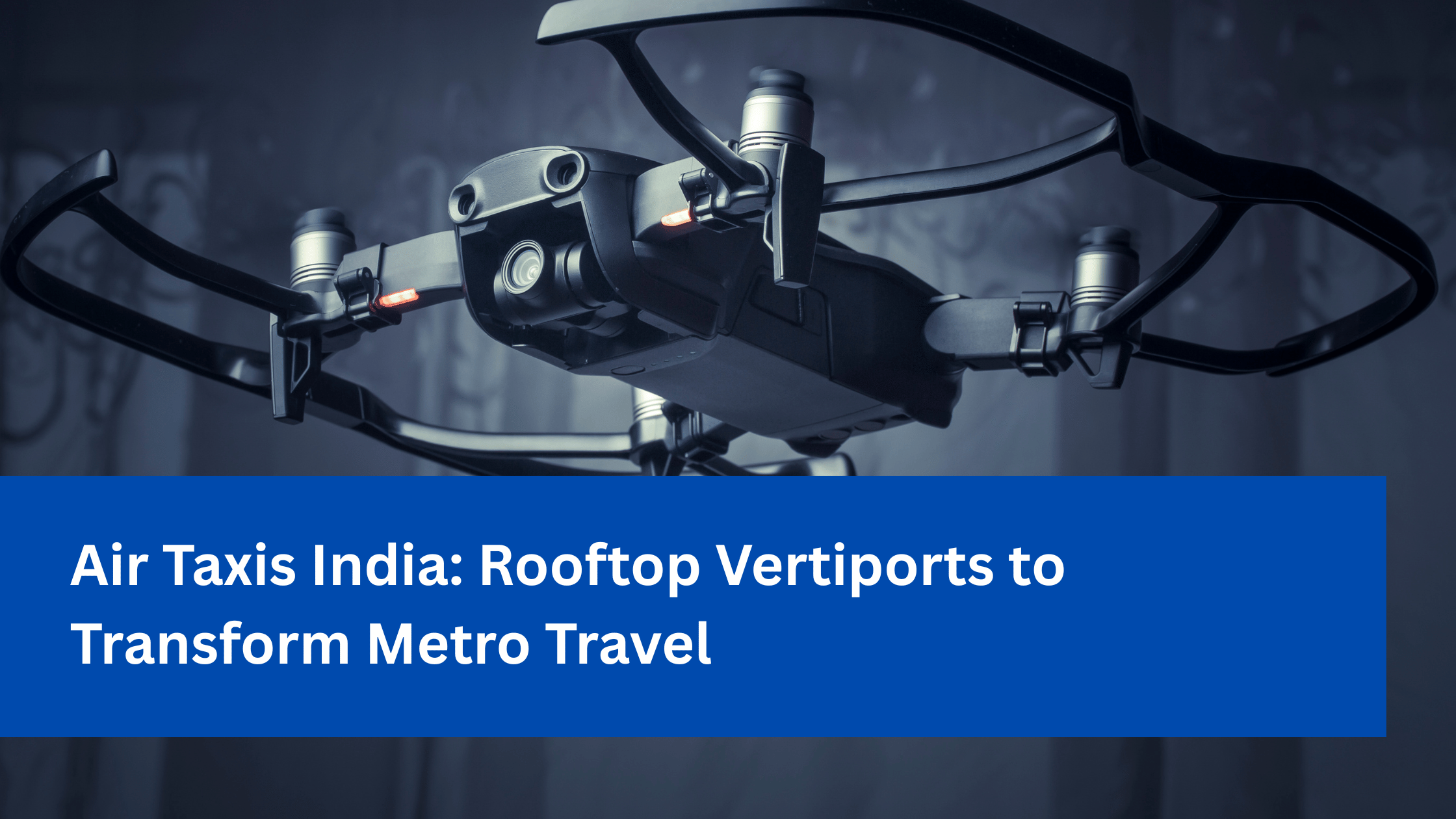
Air Taxis India Set to Change Urban Transit
Air taxis India are emerging as a futuristic transport solution that could significantly reduce commuting time across congested cities. With advanced electric vertical take-off and landing (eVTOL) technology, government and industry leaders are planning a network of rooftop vertiports that could operate from existing buildings, hospitals and commercial towers in major metros.
🚁 What Are Air Taxis?
Air taxis are advanced aircraft, often powered by electric systems, designed to take off and land vertically — similar to helicopters but quieter and more efficient. These vehicles are part of a broader concept called Advanced Air Mobility (AAM), focused on creating a reliable, urban aerial transport system to ease ground traffic and support fast intercity travel.
🏙️ Why Rooftop Vertiports for Air Taxis?
Urban land scarcity and high costs make traditional ground-based vertiports difficult to build in crowded cities. Rooftops on buildings, hospitals, and office towers offer a scalable solution that leverages under-utilised space, enabling:
- Faster integration with metro stations and transit hubs.
- Reduced commute times between business districts and airports.
- Strategic positioning for medical logistics like organ transport and emergency services.
📍 Pilot Routes: Delhi NCR to Jewar Airport
A proposed prototype air taxi corridor is expected to connect Gurugram, Connaught Place and Jewar International Airport in Noida. This air route could slash travel duration from hours on busy roads to minutes in the sky, helping ease congestion across the National Capital Region.
📜 Regulatory Framework & Challenges
Currently, routine commercial take-offs and landings from building rooftops aren’t covered under existing aviation regulations in India. Authorities like the Directorate General of Civil Aviation (DGCA) are exploring updated safety standards and frameworks to permit routine air taxi operations.
To integrate air taxis safely into the national airspace, regulators would need to evolve rules covering:
- Flight paths and navigation systems.
- Safety and emergency response protocols.
- Noise and environmental considerations.
Investing in the Future of Urban Air Mobility
The industry report suggests financial support from public institutions, banking bodies and government grant agencies to launch and scale air taxi services. Dedicated funding solutions could enable infrastructure development and encourage private-sector innovation in AAM.
✈️ Benefits of Air Taxis for Indian Cities
- Reduced travel time: Short trips once bogged down by traffic could be completed in minutes.
- Enhanced mobility: Aerial routes complement metro and road transport.
- Urban congestion relief: Fewer vehicles on roads means smoother ground traffic.
- Medical urgency response: Faster transport of medical supplies, patients and organs.