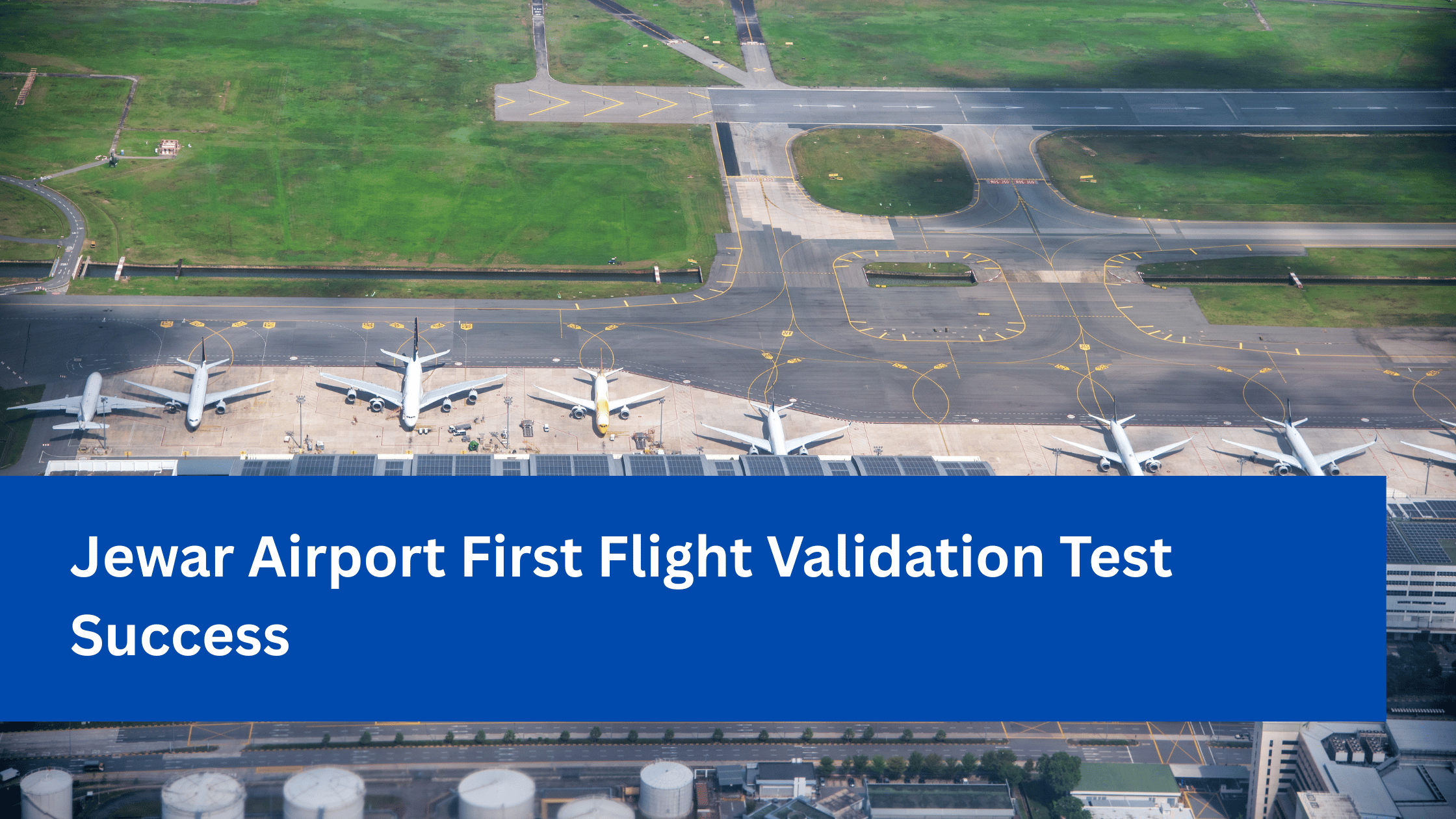
Jewar Airport First Flight Validation Test Successful — Major Step to Commercial Operations
Noida’s upcoming Jewar International Airport has achieved a significant milestone with the successful completion of its first flight validation test, bringing it one step closer to commencing commercial flight operations in April 2025.
📍 What Happened?
On December 9, 2024, an IndiGo test flight departed from Delhi’s Indira Gandhi International Airport (IGIA) and landed at the new Jewar Airport, located in Gautam Buddha Nagar, Uttar Pradesh. The trial flight — conducted as part of the airport’s validation process — was monitored by civil aviation authorities, technical teams, and aviation officials.
The aircraft remained airborne for over 1.5 to 2 hours before landing, allowing experts to assess critical systems such as:
- Navigation and communication with Air Traffic Control (ATC)
- Runway performance and runway infrastructure
- Airspace coordination and safety procedures
- Emergency response readiness and monitoring protocols
Only flight crew were on board for this validation test — no passengers were carried.
📋 Why This Test Matters
Before an airport can begin regular commercial operations, it must receive clearance from the Directorate General of Civil Aviation (DGCA). This process includes rigorous flight validation tests to verify that:
- Runways and approach systems are working correctly
- Navigation support systems like Instrument Landing System (ILS) and Precision Approach Path Indicator (PAPI) are calibrated
- Communication systems between planes and ATC are fault-free
- Safety checks and emergency systems perform as expected
Completion of this flight validation test now opens the path for Jewar Airport to apply for an aerodrome license from the DGCA — a mandatory step before commercial flights can begin.
🛠 Infrastructure & Readiness
The airport’s runway spans 3.9 kilometers, designed in collaboration with the Zurich Airport Authority (Switzerland), ensuring it meets international performance standards.
Earlier test phases included calibration of navigation systems and simulator trials to validate the airport’s readiness for modern air traffic demands.
✈️ What Comes Next
With this crucial validation step completed:
🔹 The airport will submit data and documentation to the DGCA.
🔹 Upon approval, the aerodrome license will be granted.
🔹 Regular airline operations — both domestic and international — are expected to begin by April 2025.
Officials and aviation leaders have celebrated this achievement as a key moment in the airport’s development, reflecting the meticulous planning and testing that has gone into preparing the facility for future operations.