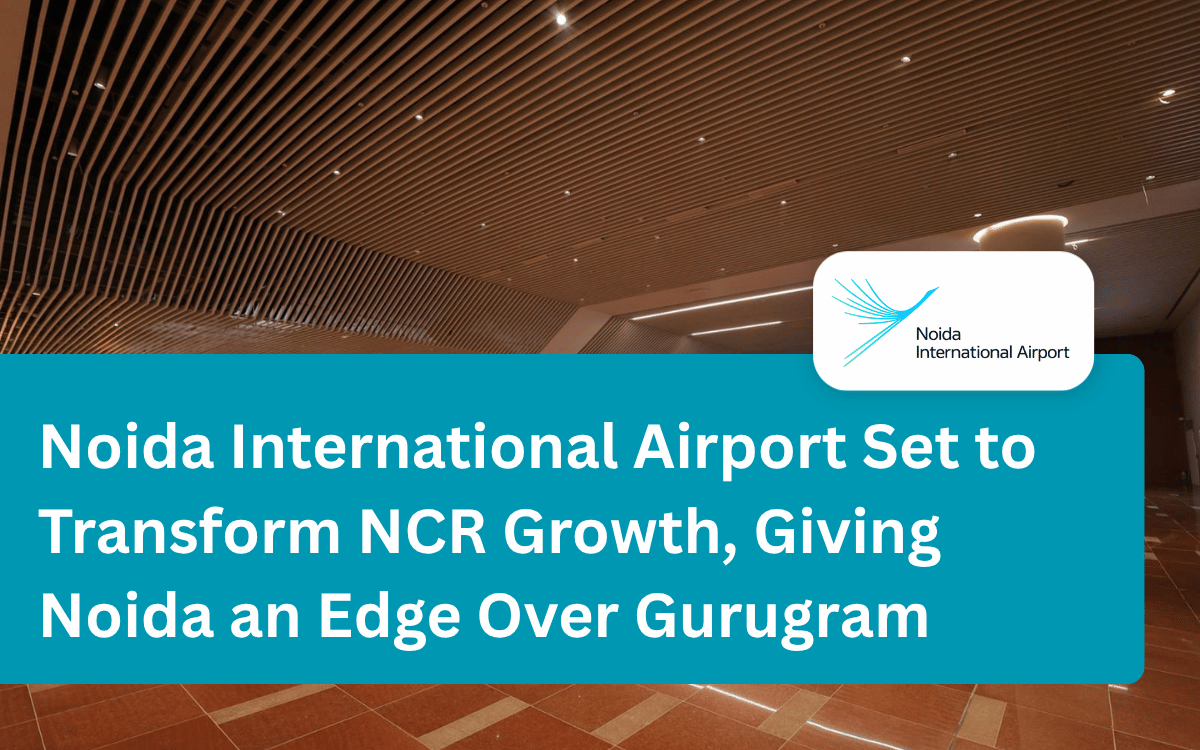
The Noida International Airport is emerging as one of India’s most significant infrastructure developments, expected to redefine economic growth, connectivity, and real estate dynamics across the Delhi-NCR region. Located in Jewar, the upcoming aviation hub is projected to become a major catalyst for Noida transformation, potentially positioning the city as a stronger investment destination compared to Gurugram.
With its inauguration marking a new phase of regional development, experts believe the airport will trigger long-term urban expansion, job creation, and commercial activity across western Uttar Pradesh and nearby NCR zones.
Why Noida International Airport Is Considered a Game Changer?
The Noida International Airport has been designed as a large-scale greenfield aviation project aimed at reducing congestion at Delhi existing airport while expanding air connectivity in North India. Phase-1 alone is expected to handle around 12 million passengers annually, with capacity planned to increase significantly through multiple expansion stages.
Unlike traditional infrastructure projects, the airport is being developed as an integrated economic ecosystem that combines logistics, cargo operations, commercial zones, and transport connectivity. The project’s strategic location along the Yamuna Expressway enhances accessibility to Noida, Greater Noida, and several industrial corridors.
Industry observers say this level of connectivity could fundamentally change how businesses and residents choose locations within NCR.
How Jewar Airport Could Push Noida Ahead of Gurugram?
For years, Gurugram benefited from its proximity to Delhi’s Indira Gandhi International Airport, attracting multinational companies and premium real estate projects. However, the launch of the Noida International Airport may rebalance this advantage.
Key factors driving the shift include:
- Improved regional connectivity across eastern NCR
- Availability of larger land parcels for planned development
- Growing industrial and logistics infrastructure
- Expansion opportunities around Yamuna Expressway
Real estate analysts suggest infrastructure-led growth patterns seen earlier in Gurugram may now repeat in Noida, supported by new business corridors and aviation-linked industries.
Real Estate Market Expected to See Strong Momentum
The airport project is already influencing property demand in Noida and surrounding areas. Market experts estimate noticeable appreciation in residential and commercial property values due to improved accessibility and future employment opportunities.
Infrastructure-driven demand typically leads to:
- Increased housing launches
- Growth in rental markets
- Rise in commercial office spaces
- Expansion of retail and hospitality sectors
As connectivity improves, Noida could attract professionals and companies looking for cost-efficient alternatives within NCR.
Connectivity and Economic Impact Beyond Aviation
The Noida International Airport is not just a travel hub but a long-term economic engine. Planned cargo facilities, logistics zones, and multimodal transport integration are expected to boost trade and manufacturing activity across northern India.
Additionally, the airport aims to ease passenger pressure on Delhi’s existing aviation infrastructure while creating new employment opportunities across sectors such as aviation services, hospitality, retail, and logistics.
Experts believe the surrounding region could evolve into an “aerotropolis” a city built around airport-driven economic growth.
What This Means for NCR’s Future Development?
The rise of the Noida International Airport signals a shift in NCR development geography. Instead of concentrated growth in western corridors like Gurugram, expansion may increasingly move toward eastern NCR and western Uttar Pradesh.
Key long-term outcomes expected include:
- Balanced regional development
- Faster urbanization around Jewar and Greater Noida
- Increased foreign investment interest
- Stronger logistics and export infrastructure
As commercial flights begin operations in the coming months, the airport is expected to accelerate infrastructure-led transformation across the region.