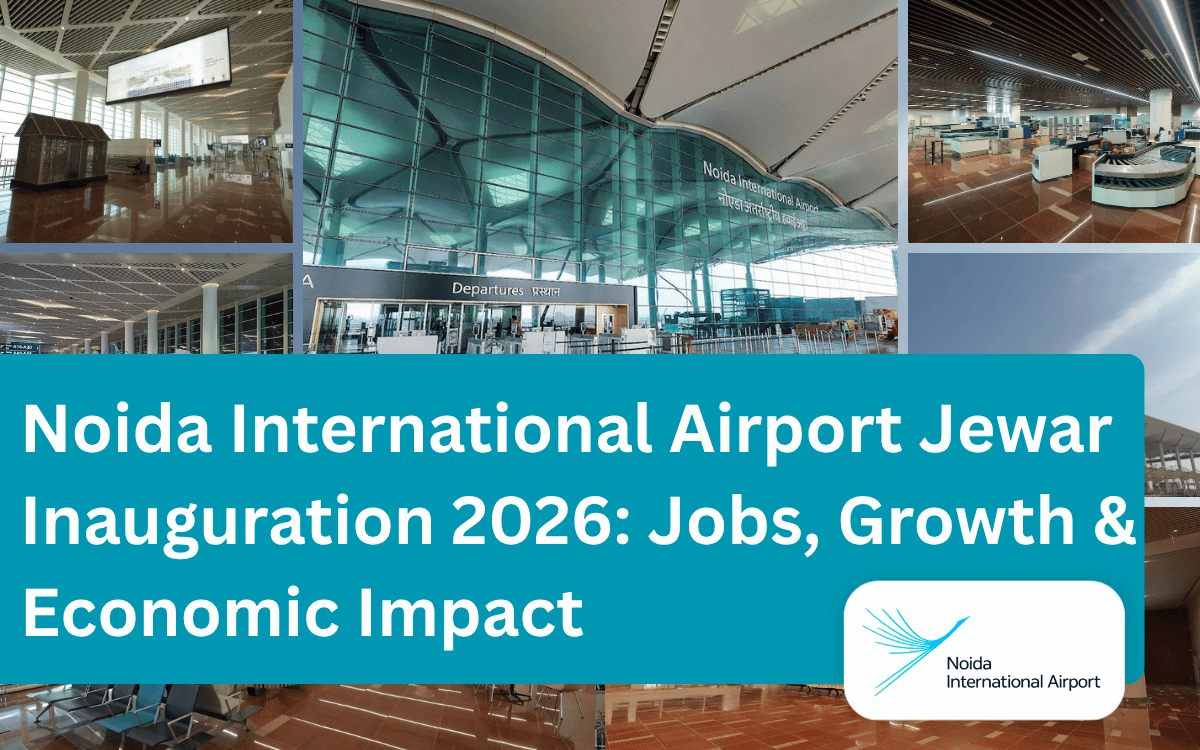
On March 28, 2026, the Noida International Airport at Jewar was officially inaugurated, marking a historic milestone in the aviation landscape of Uttar Pradesh and the Delhi‑NCR region. This major infrastructure project is expected to significantly boost job opportunities, economic investment, connectivity, and real estate development in the region.
Prime Minister Narendra Modi led the inauguration event, highlighting the airport’s role in strengthening the national aviation network and supporting long‑term economic growth. Positioned to become a strategic hub for both passengers and cargo, this airport is set to complement the existing Indira Gandhi International Airport in Delhi and ease congestion in India busiest air travel corridor.
Economic Impact and Job Creation
Officials and industry leaders project that the new airport will generate thousands of jobs, both directly and indirectly. Sectors such as aviation operations, logistics, hospitality, security, cargo handling, and retail are expected to see significant employment growth as activities ramp up. Government sources indicate that around 5,000 jobs are likely to be created in the initial phases, with recruitment underway in partnership with multiple companies.
Union Civil Aviation Minister Ram Mohan Naidu emphasized that the airport will attract industry investment and economic activity far beyond its immediate vicinity, helping establish Uttar Pradesh as a major destination for business, tourism, and trade.
Infrastructure and Connectivity Advancements
The new airport’s Phase‑1 development includes a modern passenger terminal, cargo facilities, air traffic control systems, and a runway capable of handling millions of travelers annually. In its first operational stage, it can manage up to 12 million passengers per year with plans to scale up as demand increases.
Strategic connectivity projects, including expanded road links like the Yamuna Expressway and future rail and metro connections, are designed to ensure seamless access between Noida, Greater Noida, Delhi, and neighboring regions. Enhanced transport infrastructure is expected to support daily commuters and international travelers alike, fostering broader economic integration.
Real Estate and Local Development
The airport’s inauguration has also energized the real estate market in and around Greater Noida and Jewar. Property experts anticipate continued demand growth, with predictions that land and housing prices may rise significantly in the coming years as commercial and residential development accelerates around the new aviation hub.
Several government‑led initiatives are underway to create supporting infrastructure including industrial parks, logistics zones, and urban hubs further enhancing the region’s economic potential.
Public Feedback: Hope and Concerns
Local reactions are mixed. While many residents have expressed optimism about improved opportunities and infrastructure, some community members have voiced concerns that job promises tied to the project have not yet fully materialized, leading to frustration among youth who had hoped for immediate employment benefits.
Despite these concerns, the overall sentiment remains positive, with many stakeholders viewing the airport as a catalyst for long‑term regional prosperity.
Long‑Term Vision and Expansion
Looking ahead, the Noida International Airport is planned to grow substantially through multiple phases, expanding passenger handling capacity and cargo operations. By becoming a central connectivity node in North India, the airport is expected to transform regional air travel, support exports, and attract global business opportunities across sectors.