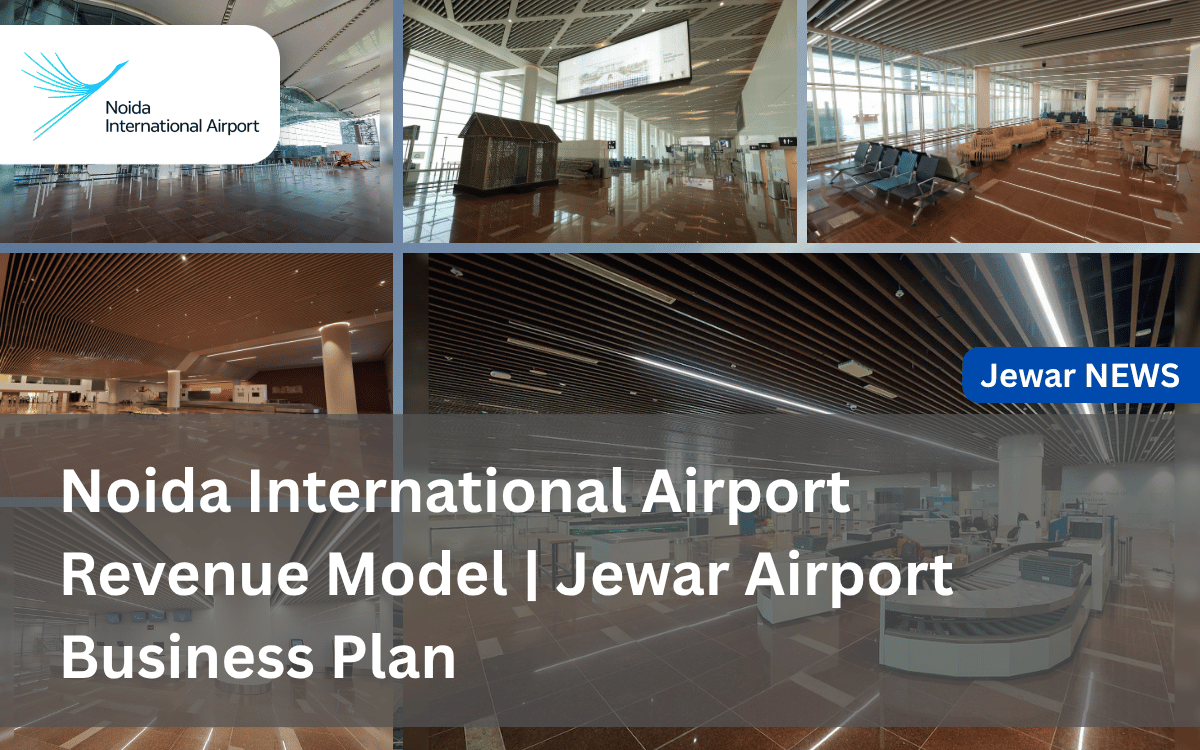
The Noida International Airport revenue model is emerging as a groundbreaking example for India aviation sector, introducing a unique system where the government earns a fixed revenue from every passenger using the airport. Located in Jewar near Greater Noida, the upcoming international airport is being positioned as a national model for future greenfield airport projects.
Unlike traditional airport agreements that rely on profit-sharing arrangements, the Jewar Airport has adopted a structured per-passenger revenue framework. Under this system, the airport operator will pay more than ₹400 to the government for every traveler passing through the airport, ensuring predictable and stable income.
A New Revenue Model for Indian Aviation
The Noida International Airport revenue model marks a shift from earlier greenfield airport policies in India. Previously, government earnings depended heavily on fluctuating profits and commercial performance. This often resulted in uncertain revenue streams.
With the new model, authorities receive assured income regardless of operational variations. Aviation experts consider this approach innovative because it provides financial clarity while encouraging efficient airport operations.
The success of this framework has already attracted attention from several Indian states, including Karnataka, Rajasthan, and Tamil Nadu, which are reportedly studying similar systems for future airport developments.
International Investment and Global Participation
The Jewar Airport project has been developed through global bidding and is backed by 100 percent foreign direct investment (FDI). International participation has helped introduce global operational standards and modern infrastructure planning practices.
This investment-driven structure strengthens India position as an attractive destination for large-scale infrastructure partnerships while ensuring advanced airport management systems.
Massive Land Acquisition Completed for Mega Project
One of the most significant achievements of the project has been the acquisition of approximately 5,428 hectares of land, making it among the largest land acquisition exercises undertaken under India’s modern land laws.
Authorities successfully completed the process with minimal disputes, despite earlier concerns from local communities. The smooth execution has been cited as a benchmark for future infrastructure projects across the country.
Academic Institutions Played Key Role
A notable feature of the project is the involvement of Gautam Buddha University, which conducted the Social Impact Assessment. The university has since gained recognition for its expertise in evaluating large development projects and is now contributing to similar assessments elsewhere.
This collaboration highlights how infrastructure projects can also strengthen academic and research institutions.
Fast Tracked Development Sets National Example
From site clearance to construction and inauguration preparations, the airport development progressed at an unusually fast pace compared to similar mega infrastructure projects in India. Officials believe this efficiency makes the airport a case study for administrative coordination and project execution.
Government representatives and planners from other states are reportedly reviewing the operational model to replicate its success.
Inauguration Preparations and Infrastructure Readiness
Authorities intensified preparations ahead of the airport inauguration, ensuring arrangements related to security, traffic management, parking, sanitation, drinking water, and lighting systems were completed on time.
The launch event is expected to attract massive public participation, reflecting the strategic importance of the airport for the region.
Economic Growth and Employment Opportunities
The Noida International Airport revenue model is also expected to accelerate industrial and economic activity across Greater Noida and surrounding districts. Local leaders believe the airport will attract new investments, logistics hubs, and manufacturing units.
As aviation connectivity improves, employment opportunities are likely to increase significantly, strengthening the regional economy and boosting business development in western Uttar Pradesh and the National Capital Region.
Why Jewar Airport Matters for India Future Aviation?
The Noida International Airport is being developed as a major aviation hub aimed at reducing congestion at Delhi existing airport while expanding international connectivity. With a sustainable financial model and modern infrastructure planning, the project represents a new direction for airport development in India.
Industry observers believe the success of this revenue structure could reshape how future airports are financed and operated nationwide.